Architecture Without the Fear: What You’re Really Paying For?
- Wihan Scholtz
- Jan 21
- 4 min read

Starting a building project is exciting, but it can also be overwhelming. Many people aren’t worried about the construction itself; instead, they fear costs, mistakes, delays, and losing control. They’ve heard stories about projects that exceeded budgets, took twice as long, or ended in disputes and disappointment. In that anxiety lies a key question: “Do I really need an architect?” The honest answer is: not always. However, understanding an architect's true role radically shifts how you view that question.
You’re Not Paying for Drawings
In South Africa, all building plans must be submitted to and approved by the local municipality. A registered professional must assume responsibility for the design and ensure it complies with the National Building Regulations (NBR) and SANS 10400.
That alone already indicates something important:
Architecture is not just about design. It’s about legal responsibility.

When you hire an architect, you’re not just paying for drawings on paper. You’re paying for a professional who:
• Takes legal responsibility for compliance
• Handles municipal approvals and by-laws
• Advises you on engineers, surveyors, and town planners
• Protects you from building something illegal, unsafe, or uninsurable
• Guides a complex process from idea to completion
Yes, for very small or simple projects, a professional draughtsperson or an architectural technologist registered with SACAP (South African Council for the Architectural Profession) might suffice, especially if the project falls within the SACAP Identification of Work (IDoW) scope. Essentially, the IDoW defines what "size" and "type" of building project a professional is legally authorized to design based on their registration category. Alternatively, an architect could be appointed just for up to Stage 4.1 (Municipal Submission) and not for full working drawings or construction oversight.
But it’s important to understand what that means:
From that point onward, the client carries the risk for deviations, construction quality, and coordination.

What People Think Architects Do (And What We Actually Do)
Most clients think architects:
Sit and draw all day
Dream up beautiful, expensive buildings
And occasionally visit the site to point at things
The reality is much less glamorous.
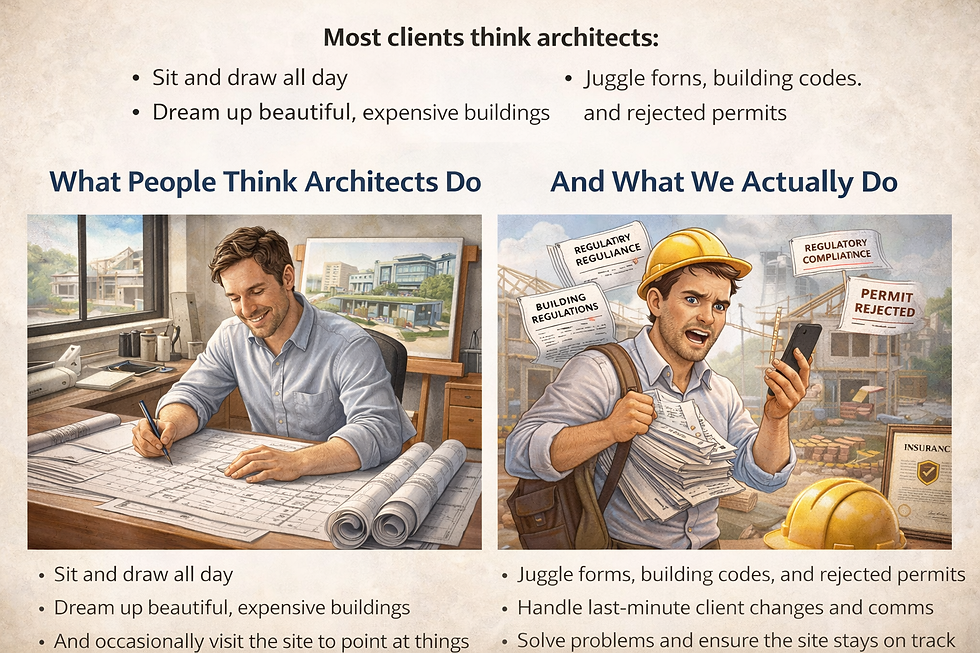
In practice, architecture is maybe 10–25% design and 75–90% coordination, communication, and administration.
Most of the work is:
Emails and meetings
Coordinating engineers and consultants
Managing approvals and compliance
Producing technical documentation
Checking contractor work
Solving messy, real-world problems
Architects are not artists-for-hire.
They are managers of complexity and guardians of intent.
When Should You Involve an Architect?
The best time?
As early as possible.
I once had a client call me because he was considering buying a property where previous owners had done construction without approved plans. Before he even bought it, I could explain the legal consequences, the approval process, and the potential fines.
He walked away. He would have been buying a house, and someone else’s illegal problems.
When you involve an architect early, they can:
Help you avoid bad purchases
Shape the project to the budget from day one
Prevent mistakes before they exist
And save you from extremely expensive “surprises.”

Do Architects Make Projects More Expensive?
Architects usually charge between 2% and 7% of construction cost, depending on scope and complexity.
Yes — that is an extra cost.
But in reality, a good architect usually saves more than they cost by:
Preventing expensive changes during construction
Producing clear drawings that reduce rework
Helping contractors price accurately
Avoiding legal and compliance problems
Designing more efficient spaces instead of just bigger ones
And reducing long-term maintenance and running costs
Changes on paper are cheap.
Changes on the site are very expensive.
The Biggest Mistake: Skipping Proper Planning
The most common mistake people make when building without professional help is jumping the gun.
They:
Start building without proper planning
Underestimate cost and complexity
Ignore NBR, SANS, and by-laws
Choose the wrong builders
Focus on looks instead of function
And discover problems when it’s already too late
The result is almost always:
“You spend twice fixing what could have been done right the first time.”
What Happens When You Hire an Architect Too Late?
Then the architect stops being a strategist and becomes a firefighter.
That means:
Expensive rework
Budget overruns
Delays
Compromised design
Compliance risks
And a lot of stress for everyone
Architecture works best when it shapes decisions early, not when it’s asked to fix them after they’ve already been built.
“But I’m Just Paying for Drawings, Right?”
No.
In South Africa, architectural services follow six work stages under the SAIA Client–Architect Agreement:
Inception
Concept & Viability
Design Development
Documentation & Procurement
Construction
Close-Out
You are paying for:
Feasibility thinking
Legal compliance
Technical specification
Tendering and cost control
Site inspections and quality control
Contract administration
And professional liability through SACAP registration and PI insurance
You’re paying for a managed process, not a drawing.
What You Should (And Shouldn’t) Expect from an Architect
You should expect:
Professional registration
A written agreement
Honest advice
Competence and due care
Risk disclosure
Impartial contract administration
And professional indemnity cover
You should not expect:
Guaranteed financial success
Control over other consultants
Perfection in every detail
Or immunity from municipal delays and external factors
The Biggest Fear Clients Have
Most clients secretly fear this:
“The architect is going to over-design my project for their ego and blow my budget.”
That fear causes clients to:
Hide their real budget
Strip services
Or delay professional involvement
And that usually leads to the exact outcome they were trying to avoid:
A design that is legally compliant… but financially unbuildable.

How to Start Without Fear
Replace:
Guessing with structure
Silence with questions
And stress with transparency
Be honest about your budget. Ask for meeting notes. Agree on communication. Use reference images. Ask for 3D views. Bring in a Quantity Surveyor early. Verify registration.
The best projects happen when the client feels like a partner, not a passenger.
The Real Point
Architecture doesn’t remove risk.
It manages it.
And that’s what you’re really paying for.
Not drawings. Not ego. Not style.
You’re paying for clarity, guidance, and protection in one of the biggest financial and emotional investments of your life.


Comments